
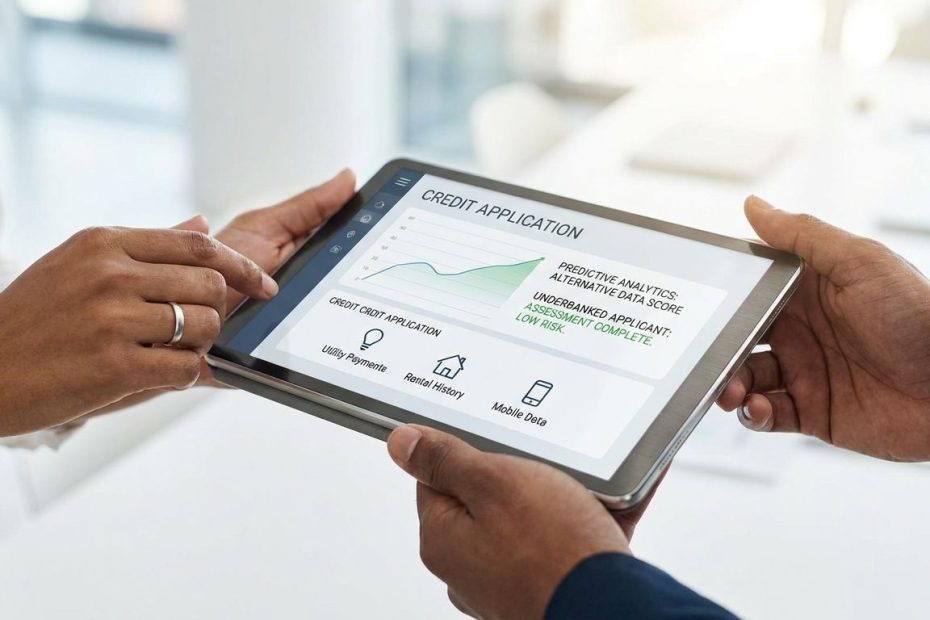
Predictive analytics is transforming credit scoring for underbanked populations by using alternative financial signals to evaluate borrowers who don’t have enough traditional credit history. Instead of judging you only by past loans and credit cards, newer models can review patterns like rent, utilities, cash flow, employment, and bank activity.
That shift matters if you’ve been denied credit because your file is thin, stale, or missing. This article explains why traditional credit scoring leaves many people out, how predictive models work, where the benefits are real, and what privacy, fairness, and transparency risks you should watch before sharing your data.
Why 63 Million Americans Can’t Get A Traditional Credit Score
If you’re underbanked, you may have a checking account but still rely on alternative financial services outside mainstream banking. If you’re unbanked, you don’t have a bank account at all. The Federal Reserve reported that 13% of United States adults were underbanked and 6% were unbanked, which points to a large group of people who may struggle to access affordable credit through normal channels.
The credit access problem gets larger when you include people who are “credit invisible.” The Consumer Financial Protection Bureau found that about 26 million Americans had no credit record at nationwide credit bureaus, and another 19 million had files too thin or outdated to produce a reliable score. That means millions of people may pay bills, earn income, manage rent, and stay financially disciplined without receiving credit for that behavior in traditional scoring systems.
This is where predictive analytics in credit scoring becomes useful. It gives lenders more signals to review when a person doesn’t have a long record of credit cards, auto loans, student loans, or mortgages. For you, the practical benefit is simple: a lender may be able to evaluate how you manage money now, not only how you used formal credit in the past.
How Traditional Credit Scoring Fails The Underbanked
Traditional credit scoring depends on data reported to major credit bureaus. That usually includes credit cards, installment loans, mortgages, payment history, credit limits, account age, balances, and recent credit applications. If you haven’t used those products, the model has little to review.
Fair Isaac Corporation (FICO) scoring also requires enough recent bureau activity to generate a score. A borrower generally needs at least one account open for six months and at least one account updated in the past six months. If you pay rent on time, keep a steady paycheck, and avoid overdrafts, those behaviors may still sit outside the standard scoring file.
This creates a gap between real financial behavior and visible credit history. You can be responsible with money and still look risky to a lender because the lender’s main scoring tool can’t see your full financial life. Predictive analytics helps close that gap by replacing missing credit history with verified patterns from other data sources.
Inside Predictive Analytics: The Data That Replaces A Credit History
Predictive analytics uses statistical modeling, machine learning, and alternative credit data to estimate the likelihood that you’ll repay a loan. The model looks for patterns linked to repayment, then compares your available data against those patterns. The goal is not to ignore risk; it’s to measure risk using more than a conventional credit file.
Common alternative data includes rent payments, utility bills, telecom payments, cash-flow history, income deposits, account balances, and bill-payment consistency. Some models also use education and employment data. In emerging markets, some lenders use mobile phone data, though that raises stronger privacy concerns and deserves careful review before you consent.
The strongest version of cash-flow-based scoring relies on consumer-permissioned data. That means you authorize a lender or financial technology company to review specific bank account activity, often through a secure data connection. If the model can see stable deposits, low overdraft activity, and regular bill payments, it may identify credit strength that a thin credit file misses.
Real-World Success Stories: Fintechs Leading The Charge
Several financial technology companies have built products around alternative credit data and machine learning underwriting. Petal uses cash-flow data and machine learning to evaluate applicants who may not have a traditional credit history. For a borrower with limited bureau data, that can make the difference between an automatic denial and a fuller review.
Upstart uses artificial intelligence in lending decisions and has described its model as considering variables beyond a standard credit score, including education and work-related information. That kind of model can expand access, but it also needs strong fairness testing because some variables can act as indirect stand-ins for income, race, or neighborhood patterns. A lender using these tools should be able to explain the main reasons behind a denial or pricing decision.
Tala focuses on using data science to serve customers who may not have traditional credit records, especially in markets where formal bureau files are limited. Models like these show why financial inclusion technology is gaining attention: they can turn everyday financial behavior into a measurable credit signal. The best outcomes happen when the lender combines broader data with clear consent, fair pricing, and plain-language disclosures.
Does It Actually Work? Evidence On Approval Rates And Defaults
The strongest argument for predictive analytics is not that it sounds innovative. It’s that broader data can help lenders approve more qualified borrowers without ignoring repayment risk. FinRegLab found that cash-flow data can help predict short-term loan repayment and may expand access by 5% to 10% without increasing defaults.
Upstart has reported that its model approves more borrowers than traditional models and can lower average annual percentage rates for approved loans. Claims like that are useful, but you should read them as company-reported performance, not a guarantee for every borrower. Your result still depends on income, debt obligations, bank activity, loan amount, and lender rules.
For underbanked borrowers, the real value is a better chance at being evaluated. A traditional model may reject you because there’s not enough history. A predictive model may ask a better question: does your current financial behavior show that you can handle this loan?
The Dark Side: Bias, Black Boxes, And Privacy Risks
Predictive analytics can expand access, but it can also create new risks if lenders use the wrong data or fail to monitor outcomes. Bias is a major concern. A model that uses education, employer, location patterns, or device information could produce unfair results if those variables track protected characteristics indirectly.
Black-box decisioning is another problem. If a model is too complex to explain, you may not understand why you were denied or charged a higher rate. Under fair lending rules, lenders still need to give clear reasons for adverse decisions, so model explainability is not just a technical preference.
Privacy deserves equal attention. Sharing rent, utility, bank, or mobile data can give a lender a deeper view of your financial life than a credit report ever did. Before you connect an account, review what data is collected, how long it’s stored, who can access it, and whether you can revoke permission.
What Regulators Are Saying And Doing
Regulators have shown interest in responsible alternative credit scoring because it may help people locked out of mainstream credit. The Consumer Financial Protection Bureau has supported controlled testing through a no-action letter to Upstart. That type of regulatory action signals openness to new models, but it does not remove fair lending obligations.
The Office of the Comptroller of the Currency and other regulators have also discussed financial technology innovation with attention to risk management. Lenders still need to test models, document decisions, prevent discrimination, and give consumers usable explanations. New data does not give lenders a free pass to make unfair or opaque decisions.
For you, the practical takeaway is to favor lenders that explain their data use in plain language. A responsible lender should tell you what information it reviews, why it matters, and what happens if you’re declined. If the company can’t explain those basics, treat that as a warning sign.
How To Build Your Credit Using Alternative Scoring Without Getting Scammed
You can benefit from alternative scoring without handing your data to every app that promises instant approval. Start with lenders that clearly state what data they use and how they protect it. If you’re asked to connect a bank account, check whether the connection is read-only and whether you can disconnect it later.
Build visible repayment history wherever possible. Reported rent payments, secured credit cards, credit-builder loans, and on-time utility or telecom payments can help create a stronger profile. If a lender uses cash-flow-based scoring, consistent deposits, low overdraft activity, and predictable bill payments can strengthen your application.
Watch the cost of credit closely. Access is useful only if the loan terms are manageable. Compare the annual percentage rate, fees, repayment schedule, late-payment policy, and total repayment amount before accepting an offer. Predictive analytics is transforming credit scoring for underbanked populations, but you still need to choose products that improve your financial position instead of trapping your budget.
What Is Predictive Analytics In Credit Scoring For Underbanked Borrowers?
- Uses alternative data
- Reviews cash flow and bills
- Helps thin-file borrowers
- Can expand loan access
- Requires privacy and bias checks
Choose Better Data, Not Blind Trust
Predictive analytics gives underbanked borrowers a fairer shot when traditional credit scoring can’t see enough of their financial behavior. The strongest models use permissioned data, explain decisions, test for bias, and price credit responsibly. You should look for lenders that show you what they collect, how they use it, and what rights you have after a denial. Used well, predictive analytics is transforming credit scoring for underbanked populations by turning rent, bills, income patterns, and cash-flow behavior into a clearer credit picture. Used poorly, it can replace one barrier with another, so your best move is to compare offers, protect your data, and choose lenders that earn your trust before they ask for access.
References
- Federal Reserve — Economic Well-Being Of United States Households, Banking And Credit
- Consumer Financial Protection Bureau — Data Point: Credit Invisibles
- FinRegLab — The Use Of Cash-Flow Data In Credit Underwriting
- Fair Isaac Corporation — Understanding FICO Scores
- Upstart — Company Information
- Petal — How Petal Works
- Tala — Technology Overview
- Consumer Financial Protection Bureau — No-Action Letter To Upstart Network
- National Consumer Law Center — Predatory Lending And Financial Technology Resources
- S&P Global Market Intelligence — Alternative Data In Credit Scoring